10 Best Video Capture Cards in 2026

Disclosure: As an Amazon Associate we earn from qualifying purchases.
Guermok is the pick for flexible streaming and recording setups that need low-latency capture, broad device support, and easy plug-and-play use.
Choosing video capture cards can feel tricky when you need the right mix of resolution, latency, and device support. You may also want something that works with your console, camera, or computer without making setup harder.
These picks cover simple plug-and-play options, higher-resolution pass-through, and models with extra audio input or portable builds.
Top Picks
Top 10 Video Capture Cards Review
Pros and cons are taken from each product's listing details.
Guermok Video Capture Card
- USB 3.0 capture with 4K@30Hz input
- 1920×1080@60Hz output
- Aluminum body for heat dissipation
- Capture use only
- Requires capture software
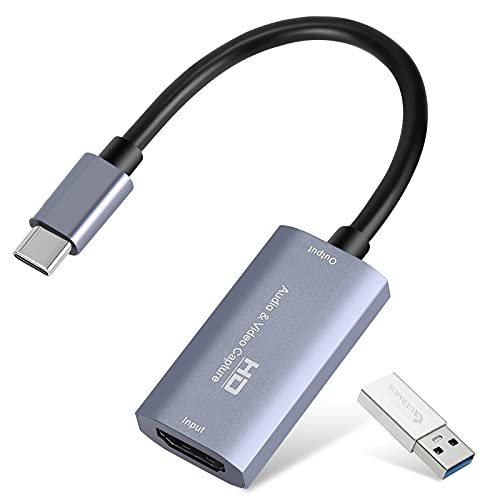
Guermok is a compact HDMI to USB-C capture card for streaming, recording, and online meetings. It is described as handling up to 4K@30Hz input and 1920×1080@60Hz output, with USB3.0 transmission and a small aluminum body for heat dissipation. The plug-and-play design keeps setup simple, and the broad device list covers consoles, cameras, computers, and tablets. It suits people who want a flexible card for mixed use.
Guermok also stands out for portability and wide compatibility. The listing says it works with USB and Type-C connections, supports many operating systems and apps, and can be carried easily for outdoor streaming. The main limits are that it is for capture only and needs capture software to function, so it fits users who already have a recording setup in mind.
Elgato 4K S Capture Card for PS5

- 4K60 capture
- 1440p120 or 1080p240 passthrough
- HDR10 support
- Analog audio input
Elgato is built for people who want high-resolution capture and fast passthrough in one setup. The listing highlights 4K60 capture, 1440p120 or 1080p240 passthrough, HDR10 support, and a 3.5 mm analog audio input for chat or commentary. It also lists cross-platform support for major consoles, so it suits players who want a premium-feeling option for current systems.
Elgato is a strong match if you care about smooth gameplay and richer video detail. Its audio input adds flexibility for voice capture, while the stated HDR10 support helps it fit more advanced display setups. Choose it when you want a card centered on fast passthrough and higher-end capture features rather than a basic entry-level unit.
Audio Express AXHDCAP 4K HDMI Video Capture Card

- 4K HDMI input
- 1080P output
- Ultra low latency preview
- Plug and play
- USB 2.0 only
- Not compatible with USB 3.0 recording speeds
- Not compatible beyond 1080p at 30fps
Audio Express is a straightforward HDMI capture card for users who want real-time preview and simple setup. The listing says it takes 4K 60FPS HDMI input and sends out 1080P video with stereo sound, while also supporting Windows, MacOS, and Linux. It is presented as plug and play, with no driver or external power requirement, which helps keep setup easy.
Audio Express suits people who need a basic streaming or recording device and do not need faster USB 3.0 speeds. The listed limits are clear: it is USB 2.0 only and does not go beyond 1080p at 30fps. That makes it better for simpler workflows, teaching, conferencing, or casual capture than for higher-bandwidth recording.
VIXLW Video Capture Card

- 4K HDMI input
- 2K@30Hz or 1080P@60Hz recording
- Ultra low latency
- Compact and portable
VIXLW is a compact capture card for users who want a small aluminum unit with flexible recording support. It accepts 4K@30Hz input and records at 2K@30Hz or 1080P@60Hz, with no driver or external power required. Its aluminum shell and chipset are described as supporting heat dissipation and stable transmission, which suits streamers who move between setups.
VIXLW also works across many systems and HDMI devices, including Windows, macOS, Linux, Android, consoles, DSLR cameras, and TV boxes. It fits people who want easy USB 3.0 or Type-C connection and a lightweight card for outdoor streaming or mobile recording. If portability matters more than extra audio features, this is a sensible fit.
Dcyfol Capture Card 4K HDMI Video Streaming to USB 3.0 1080P 60FPS Capture
- 4K HDMI loop-out
- 1080P 60FPS capture
- USB 3.0 connection
- Plug-and-play setup
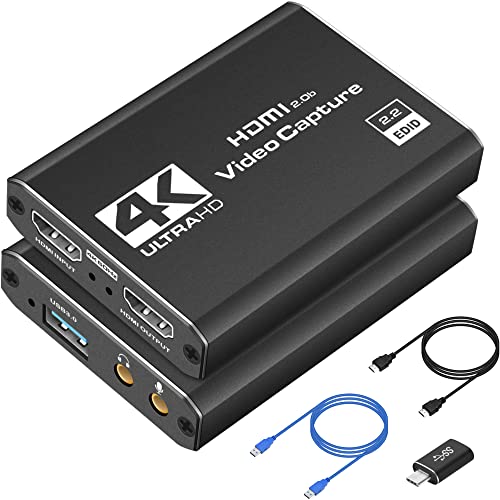
Dcyfol is aimed at creators who want capture and passthrough in a compact USB 3.0 card. The listing describes 4K HDMI loop-out, 1080P 60FPS capture, and plug-and-play use with no drivers needed. It also says the card works with popular streaming software, which keeps it useful for gaming, recording, and broadcasting from HDMI sources.
Dcyfol fits people who want to monitor gameplay while sending footage to a computer without complex setup. The portable design is helpful for creators who switch locations often, and the broad device support includes consoles, PCs, and cameras. Choose it when loop-out matters to your setup and you want a simple card for fast switching between recording locations.
UGREEN 2K@30Hz 1080P 60FPS Video Capture Card 4K Input HDMI to USB 3.0
- 2K@30Hz output
- 1080p 60FPS backward compatibility
- USB-A and USB-C ports
- Aluminum casing
- Requires iPadOS 17 or later for USB-C iPad use
- Only supports HDMI input sources
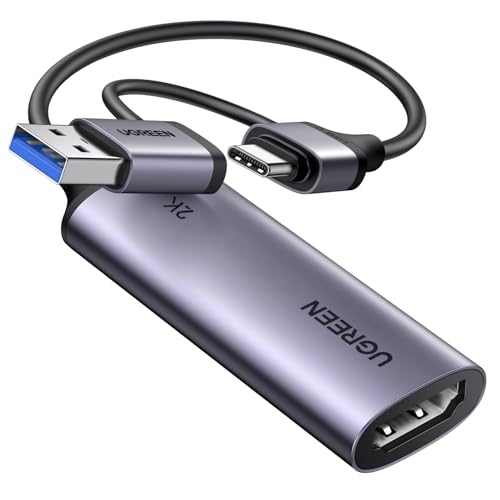
UGREEN is a flexible capture card for people who want both USB-A and USB-C connections. It supports 4K@30Hz input, 2K@30Hz output, and backward compatibility with 1080p 60FPS. It is described with an aluminum casing and a built-in cable, which suits users who want a tidy, travel-friendly setup for different devices.
UGREEN works with Windows, macOS, Linux, phones, tablets, and Quest 3, and the listing also mentions support for many streaming and recording apps. Its limits are worth noting: iPad USB-C use needs iPadOS 17 or later, and it only supports HDMI input sources. That makes it a good pick for people who want broad device support in a single card.
acer USB 3.0 HDMI Capture Card

- 4K input
- 1080P@60Hz output
- Mic-in for commentary
- Plug and play
Acer is a compact capture card for people who want built-in commentary support alongside game capture. It has 4K input, 1080P@60Hz output, and a 3.5 mm mic-in for voice recording. It also describes a plug-and-play design with no extra drivers or external power, which keeps it simple for streaming and teaching.
Acer suits users who want low-latency capture and direct microphone connection in one device. The listing also points to broad app and device compatibility, including major consoles, cameras, PCs, macOS, and Android. If you want commentary without extra adapters, this card has a clear advantage over more basic models.
NEWCARE HDMI Video Capture Card for Streaming

- 4K60 HDR pass-through
- 1080P60 capture
- USB-A/USB-C 2-in-1
- 3.5 mm mic input
NEWCARE is for buyers who want a feature-rich capture card with 4K60 HDR pass-through and 1080P60 recording. The listing also includes a USB-A/USB-C 2-in-1 connection, a 3.5 mm microphone input, and a 3.5 mm audio output for monitoring. Its aluminum housing is described as helping with heat dissipation during longer sessions.
NEWCARE works well for streaming setups that need pass-through, commentary, and broad software support in one unit. It is compatible with Windows, macOS, consoles, DSLR cameras, and camcorders, and the package includes a USB-A/USB-C cable, a 4 ft HDMI cable, and a manual. Choose it if you want a more fully equipped card for varied HDMI sources.
Fifine AmpliGame Video Capture Card

- 1080P/60FPS capture
- 4K/30FPS HDMI loop-out
- HDMI Output and headset ports
- 9 RGB modes
AmpliGame is a capture card for people who want recording features plus a more colorful desk setup. It delivers 1080P/60FPS capture, has a 4K/30FPS HDMI loop-out, and includes HDMI Output, LINE IN, and Headset Ports. It also adds 9 RGB modes, which makes it stand out from more basic cards.
AmpliGame fits users who want a streaming setup with audio options and visible lighting effects. It works with Windows and Mac PCs, as well as PS4, PS5, and other gaming setups, and it supports major streaming platforms. It is a good choice when you want both capture and a more styled desktop presence.
PDAPTMAG 4K Video Capture Card

- 1080p 60fps capture
- USB 2.0 connection
- Screen sharing for meetings
- Compact and portable
- USB 2.0 based
PDAPTMAG is a simple capture card for people who want basic recording and screen sharing from HDMI sources. It captures up to 1080p 60fps, uses USB 2.0, and works for conference rooms and online meetings without software. It also describes a small, portable body, which keeps it easy to carry between spaces.
PDAPTMAG suits users who need an uncomplicated card for presentations, streaming, or casual recording. The listing adds plug-and-play support for Windows, macOS, and Linux, along with compatibility with common streaming apps. Its USB 2.0 basis is the main limit, so it fits straightforward tasks better than demanding high-bandwidth setups.
How to Choose Video Capture Cards
Match the Output
Start with the resolution and frame rate you actually need. A card that handles 1080p60 may be enough for simple recording, while 4K input or higher passthrough helps if you want more room for editing or smoother gameplay on an external display.
Also look at the supported output path. Some cards focus on recording quality, while others include loop-out or pass-through for a separate monitor. That difference matters when you want to play and record at the same time without changing your setup.
Check the Connection Type
USB 3.0 and USB-C usually give you more headroom than USB 2.0, especially when you want cleaner capture at higher settings. If you plan to move the card between devices, a dual-interface design can make life easier.
It also helps to check whether the card needs extra power, extra drivers, or a specific software setup. A simpler connection can save time, but only if it still fits the devices you use most often. Matching the interface to your laptop, tablet, or desktop keeps setup smoother.
Think About Audio Needs
Some cards only handle video, while others add mic-in, line-in, or audio monitoring ports. If you stream with voice commentary or want direct headset support, those extras can be more useful than a small jump in video specs.
Audio routing also affects how easy the card is to use with your existing gear. A direct mic input can reduce the need for adapters, and a headphone output can make monitoring simpler during live recording or meetings.
More to Consider for Video Capture Cards
Source Device Support
Check whether the card works with the source devices you use most, such as consoles, cameras, PCs, or tablets. Broad support matters if you switch between setups. A card that works with many HDMI sources can save time, but only if those devices match the card's stated input limits and software support.
Software Compatibility
Make sure the card fits the recording or streaming app you already use. Many cards mention OBS, VLC, Zoom, Streamlabs, or XSplit, and that can matter more than flashy extras. If your workflow depends on one app, confirm that the card is described as working with it before you buy.
Body And Cable Design
The physical design can affect how easy the card is to carry and store. A compact body helps if you move between rooms or travel with your gear, while a built-in cable can reduce clutter. Metal housings are also common on cards meant to handle heat during longer sessions.
Frequently Asked Questions
What should I look for first in a capture card?
Start with the resolution, frame rate, and connection type that match your setup.
Which option is better for console gameplay?
Elgato is the most feature-rich choice for console play because it lists 4K60 capture, 1440p120 or 1080p240 passthrough, HDR10 support, and a 3.5 mm analog audio input. NEWCARE also suits console setups with 4K60 HDR pass-through and 1080P60 capture.
Which models are easiest to carry around?
Guermok, VIXLW, Dcyfol, Acer, and PDAPTMAG are all described as compact or portable, which helps if you move between rooms or setups.
Which cards include microphone support?
Elgato has a 3.5 mm analog audio input for chat or commentary, and Acer includes a 3.5 mm mic-in for voice recording.
Which picks work with USB-C devices?
Guermok includes both Type-C and USB interfaces, which makes it useful across many devices. VIXLW supports USB 3.0 or Type-C connection, and UGREEN lists both USB-A and USB-C ports with support for phones, tablets, laptops, and desktops.
Final Verdict
Guermok is the strongest all-around pick because it combines 4K@30Hz input, 1920×1080@60Hz output, aluminum construction, and broad compatibility in a compact, plug-and-play design. It suits buyers who want one card for streaming, recording, meetings, and portable use.
Elgato is the choice for higher-end passthrough and HDR support. Audio Express fits simpler USB 2.0 setups, while VIXLW suits portable use with 2K recording and aluminum housing.